Marketing Attribution & Campaign Measurement
frankdenblankenpt.nl had great coaching but no way to tell which channel was really driving bookings. Attribution modelling plus a real incrementality test answered that -- and changed where the ad budget went.
Client
frankdenblankenpt.nl
Role
Web & Analytics Consultant
Timeline
Peak results Oct 2024
Deliverables
WordPress rebuild + GTM/GA4 tracking + multi-channel attribution + Power BI dashboard
+300% traffic
5K+ visits (Oct 2024)
Funnel tracking
ROI clarity
frankdenblankenpt.nl offered genuinely strong personal training and coaching, but the website had no real conversion strategy behind it — no dedicated landing pages, no booking flow built for conversion, and no way to see where visitors dropped off before becoming a lead, or which of Frank’s Google Ads, Meta Ads and organic traffic was actually behind each enquiry.
Rebuilding the foundation first
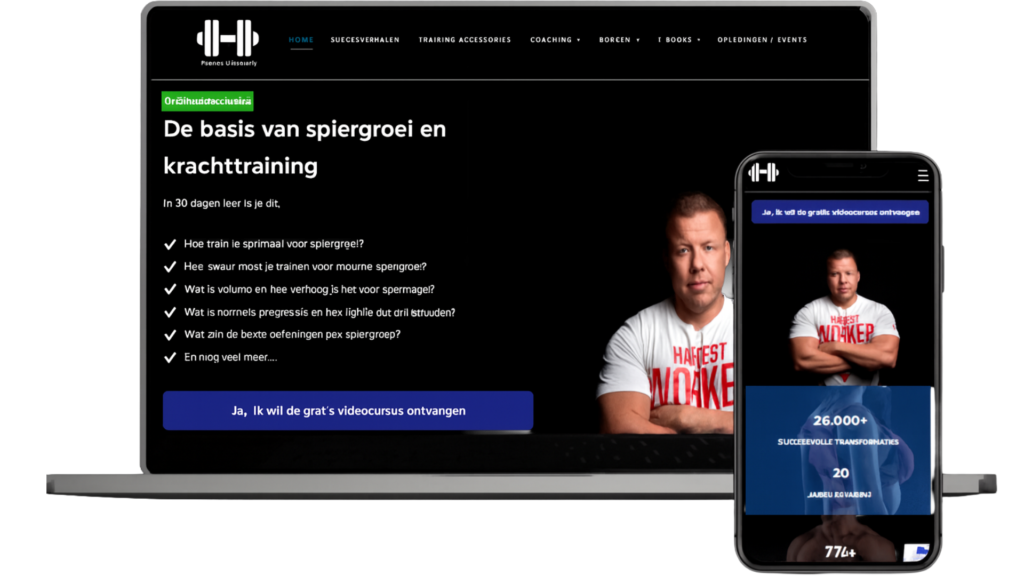
Before any tracking could be meaningful, the site itself needed structure: a rebuild in WordPress using Elementor and Crocoblock introduced dedicated landing pages, proper booking forms, and a CTA-focused homepage with a specific focus on mobile speed.
Tagging it properly before trusting any number
GTM was rebuilt around the new site structure — every booking step, form interaction and outbound click fired its own tagged event, with consistent UTM parameters enforced across every Google Ads, Meta Ads and email link, so the data feeding GA4 could actually be trusted downstream.
Attribution told one story; a holdout test told another
GA4 and SQL-joined session data built an assisted-vs-last-click attribution model showing SEO was quietly contributing to bookings well before the last click — but attribution still assumes every assisted conversion was incremental. To check that assumption, I paused Google Ads in Frank’s area for two weeks against a matched prior-year baseline: bookings dropped by less than the ad platform’s own reported conversions, meaning a real share of “paid” bookings would have happened anyway through organic and direct. That gap is what attribution alone can’t see.
A Power BI report Frank could actually read
The incrementality-adjusted numbers fed a Power BI dashboard built around one question Frank asked directly: which channel is actually worth paying for. Search, Google Ads, Meta Ads and email sat side by side against enquiries and bookings — adjusted for what was truly incremental, not just attributed — so budget decisions could be made on what drove business rather than on reach.
Results
- Traffic increased by roughly 300%, peaking at 5,000+ visits in October 2024
- Holdout test showed a meaningful share of paid-attributed bookings were not incremental, prompting a Google Ads budget cut with no measurable drop in real bookings
- Funnel insights directly informed copy and CTA improvements at the pages losing the most leads
- SEO’s real, previously invisible contribution made visible for the first time
Reflections
Attribution and incrementality gave two different answers to “what’s working,” and the gap between them was the actual finding — not the dashboard itself, but the willingness to test whether the dashboard’s own numbers could be trusted at face value. Walking Frank through that in plain terms, not a wall of GA4 screenshots, was what changed his ad spend the following month.
Speed and structure come before funnel tracking
There was no point measuring a funnel built on a slow, unstructured site, so the WordPress rebuild came first.
Every lead action should be a trackable event
Form starts, submissions and bookings were each instrumented individually in GA4, not just a single generic "contact" conversion.
Attribution should reflect reality, not just the last click
An assisted vs last-click attribution model was built specifically because a coaching business's leads rarely convert on their very first visit.
Rebuilding on WordPress with Elementor and Crocoblock
The site was rebuilt around dedicated landing pages, booking forms, and a CTA-focused homepage, with a direct focus on mobile load speed.
Instrumenting the full lead funnel
GA4 events were set up for each meaningful step: form starts, submissions and completed bookings, rather than one blunt "contact" conversion goal.
Joining traffic sources in SQL
GA4 session data was joined in SQL with traffic-source data so every lead could be traced back to the channel that actually drove it.
Building the Power BI funnel and attribution model
A sessions → starts → bookings funnel was modelled in Power BI, alongside a multi-channel attribution view comparing assisted vs last-click credit across SEO and paid channels.
Turning funnel gaps into copy and CTA fixes
Drop-off points revealed in the funnel directly informed copy and CTA changes on the pages losing the most leads.
“I'm extremely happy with the redesign—my site is faster, modern, and far more effective at attracting clients.”
Interested in a similar engagement? Get in touch — I'm available for new SEO and analytics projects.