Technical SEO Audit & Conversion Funnel Analysis
qababoard.com had strong, authoritative content but almost no search visibility. Log file analysis and JavaScript-rendering fixes -- not new content -- were what actually moved the needle.
Client
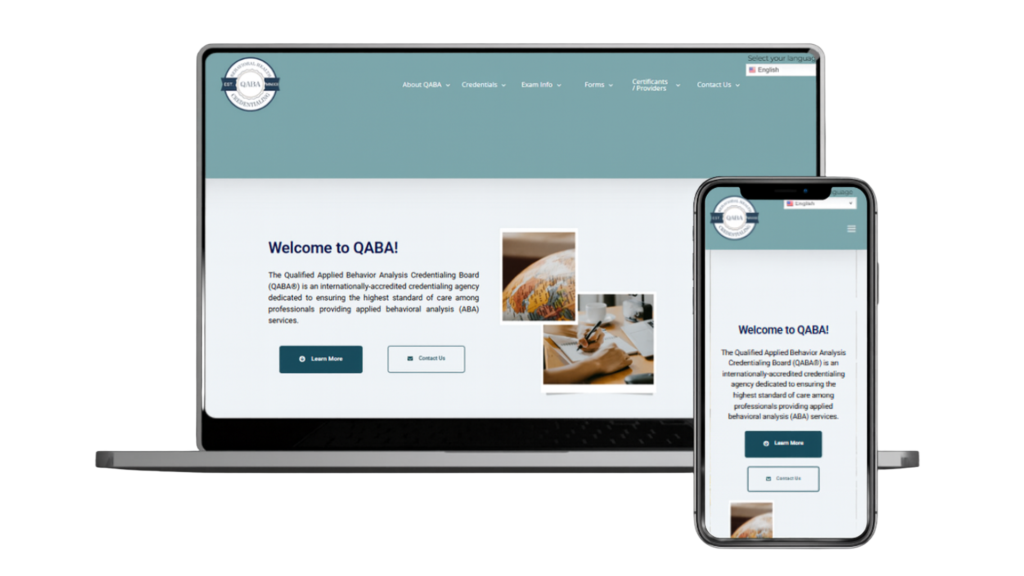
qababoard.com (Qualified Applied Behavior Analysis Credentialing Board)
Role
SEO & Analytics Consultant
Timeline
12 weeks
Deliverables
Technical SEO audit (log files + JS rendering) + keyword research + GA4 tracking + Power BI funnel
+215% organic (12 wks)
+41% session time
2× Apply/Renew
Page-1 ranking
qababoard.com — the Qualified Applied Behavior Analysis Credentialing Board — had genuinely strong, authoritative content on ABA certification, but almost none of it was visible in search. The brief wasn’t “write more content,” it was “find out why search engines won’t surface what’s already there,” with no tracking in place to confirm whether any fix actually moved applications and renewals, not just traffic.
Reading the server logs, not just the crawl report
A Screaming Frog crawl flagged the obvious structural issues, but the real diagnosis came from the server log files: cross-referencing which URLs Googlebot was actually requesting against which pages mattered commercially showed crawl budget being burned on thin, low-value URLs while certification pages went days between visits. Reallocating that — not new content — was the single highest-leverage fix available.
Checking what Google actually saw, not what the browser showed
Several certification pages rendered correctly in a browser but relied on client-side JavaScript for their core content, which a render-diff against Google’s indexed cache showed wasn’t consistently making it into the index. Pre-rendering the critical content server-side closed that gap.
Making sure AI crawlers could read it too
With AI Overviews and answer engines increasingly sitting between QABA and its applicants, the same audit checked robots.txt and server logs for GPTBot, ClaudeBot and Google-Extended access, confirmed the certification pages’ structured data was marked up cleanly enough to be extracted, and added a llms.txt file — the same crawl-access discipline applied to a newer set of crawlers, not a separate project bolted on afterward.
Keyword research into page titles, headings and internal links
Ahrefs and SEMrush’s keyword-gap reports against competing credentialing bodies showed which certification-related terms QABA could realistically win. Every priority page got a specific target term from that research, then title tags, H1/H2 structure and internal linking were rebuilt around it — the on-page signals search engines and applicants both use to understand what a page is actually about.
Defining what “success” needed to measure
Before any fix shipped, I mapped the actual conversion actions that mattered to QABA (certification applications and renewals) so GA4 and the eventual Power BI funnel would measure outcomes, not sessions.
Watching where the application form lost people
Crazy Egg’s scrollmaps and click data on the application and renewal pages showed exactly where visitors hesitated or abandoned the form, feeding directly into page-by-page fixes rather than guessing from GA4 alone.
A funnel, not just a traffic dashboard
GA4 events were modelled through SQL into a Power BI funnel (impression → click → application/renewal), so the traffic gain could be tied directly to certification outcomes — the report QABA’s own team used in its monthly review.
Results (12 weeks)
- +215% organic traffic
- +41% average session time
- 2× Apply/Renew conversions, ranking Page 1 for “ABA technician certification”
- Crawl budget measurably reallocated toward commercially relevant pages after the log file analysis
Reflections
The traffic increase was the visible headline, but the log files were the real finding — Google was crawling QABA’s site plenty, just not the pages that mattered. Walking the non-technical team through that distinction was what got budget approved for the fix, instead of more content nobody would ever see indexed.
Fix crawlability before chasing content
QABA had strong content already; the constraint was visibility, so the audit prioritised indexability and Core Web Vitals over writing anything new.
Structured data earns the click, not just the ranking
Schema markup and CTA redesign were treated as part of SEO, not an afterthought, since ranking without a clear conversion path wasn't the actual goal.
If you can't measure the funnel, you can't defend the budget
GA4 and Power BI funnel reporting were built in parallel with the SEO fixes so impact could be attributed, not assumed.
Running the technical audit
Screaming Frog, SEMrush and Google Search Console were used together to crawl the site, surfacing indexability issues, broken internal links and Core Web Vitals problems holding back an otherwise strong content base.
Fixing the crawl and CWV issues
The highest-impact technical issues from the audit were resolved first: crawl blockers, page speed bottlenecks, and structural issues limiting how search engines could index the credentialing content.
Adding structured data and redesigning CTAs
Schema markup was added for key page types and calls-to-action were redesigned so that improved rankings actually converted into applications and renewals, not just impressions.
Wiring up GA4 through GTM
Key actions (applications, renewals, resource downloads) were tracked via GA4 through Google Tag Manager, giving a clean event layer to measure against.
Building the SQL + Power BI funnel
GA4 event data was modelled through SQL into a Power BI funnel, so organic traffic could be tracked all the way through to Apply/Renew conversions, not just as a traffic number.
Interested in a similar engagement? Get in touch — I'm available for new SEO and analytics projects.